Moisture under your home can lead to musty odors, mold, wood decay, pests and uncomfortable floors. Home Run finds where crawl space moisture comes from and builds a practical plan to control it for homes in Covington, Conyers, McDonough and nearby Georgia communities.
Warning Signs of a Moisture Problem
- Standing water or muddy soil after rain
- Wet, sagging or fallen insulation
- Mold or mildew on joists, the subfloor or ducts
- Musty odors in the living space
- Condensation dripping from ducts or pipes
- Cupping or buckling hardwood floors
- Termites, rodents or other pests
Where the Moisture Comes From
- Ground moisture evaporating from exposed soil
- Humid outside air entering through foundation vents and condensing on cooler surfaces
- Surface water from gutters, downspouts and grading that direct rain toward the foundation
- Plumbing leaks from supply lines, drains or water heaters
- HVAC condensation from sweating ducts or a leaking condensate line
How We Fix It
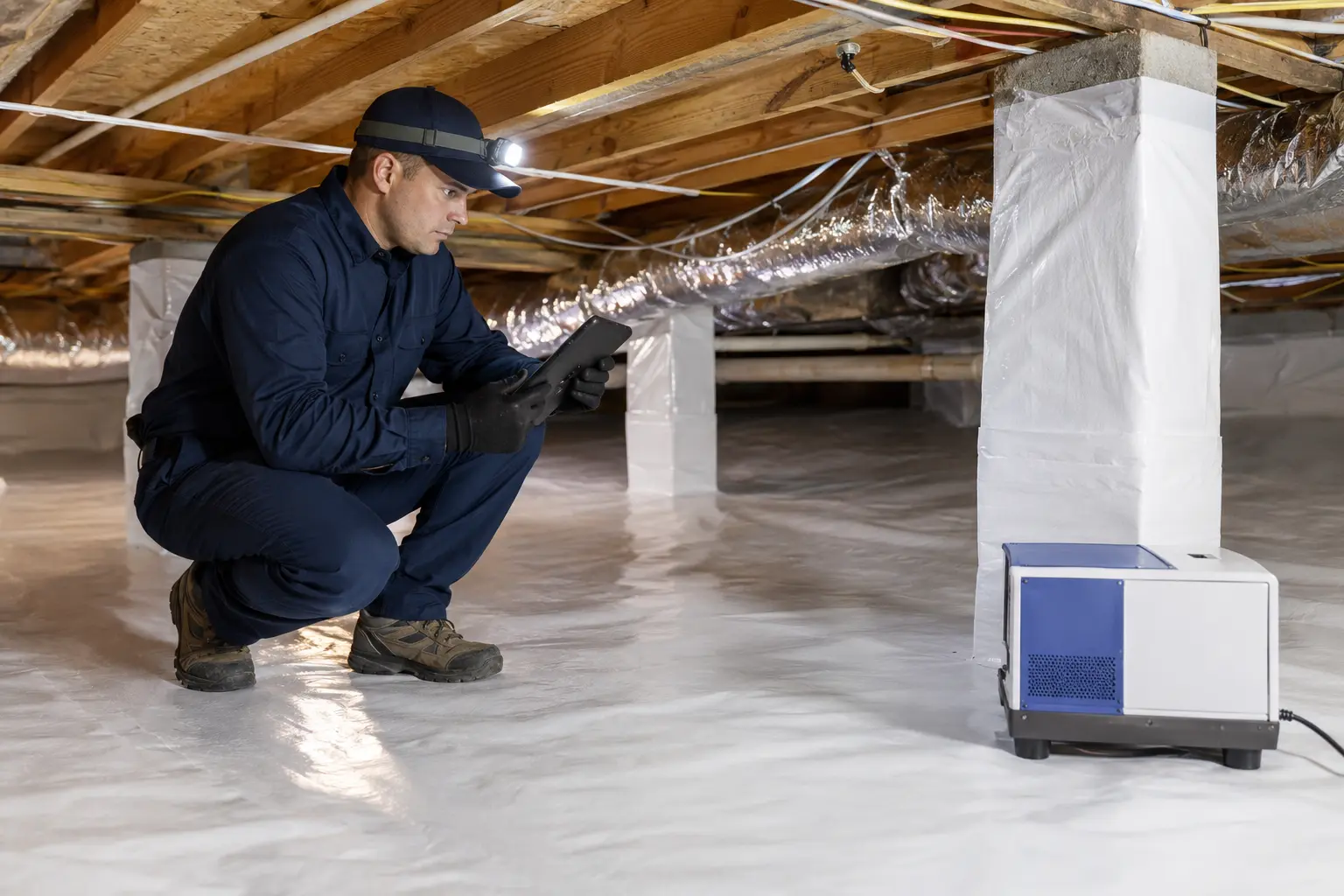
We inspect the crawl space, measure moisture and humidity, and look outside at gutters and grading. Depending on what we find, solutions can include drainage improvements or a sump pump for water intrusion, a vapor barrier, air sealing, a crawl space dehumidifier or full encapsulation. We start with the source so the fix lasts.
Crawl Space Moisture FAQs
How humid should a crawl space be?
Keeping relative humidity below about 60 percent helps limit mold growth and wood decay. Many sealed crawl spaces are kept in the 50 to 55 percent range.
Why does my crawl space get wet after rain?
Often gutters, downspouts or grading send water toward the foundation. Fixing the outside drainage is usually part of the solution.
Home Run serves Madison, Macon, Covington and nearby communities. Moisture in the house too? See whole-home dehumidifiers.