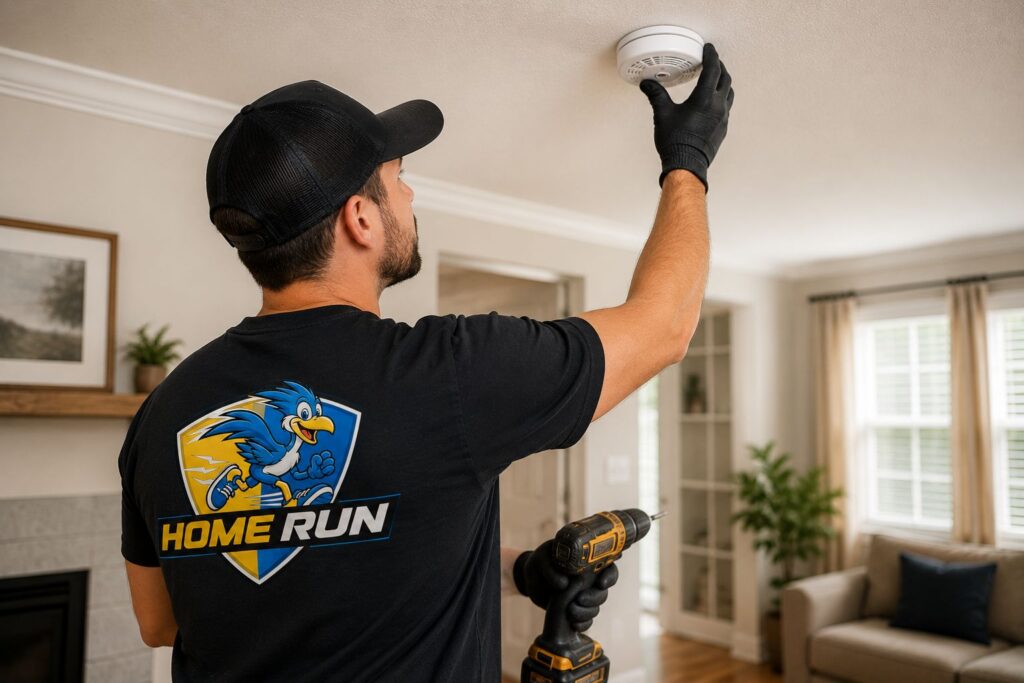
Working smoke and carbon monoxide alarms are some of the most important safety devices in any home. Home Run installs and replaces hardwired, interconnected smoke and CO alarms for homes in Covington, Conyers, McDonough and nearby Georgia communities.
Where Alarms Should Go
The National Fire Protection Association recommends smoke alarms inside every bedroom, outside each sleeping area and on every level of the home, including the basement. Carbon monoxide alarms belong outside sleeping areas and on each level, especially in homes with gas appliances, a fireplace or an attached garage.
Why Hardwired and Interconnected
- Hardwired alarms run on household power with a battery backup, so they do not depend on a battery alone
- Interconnected alarms all sound together, so a fire in the basement wakes someone sleeping upstairs
- Combination smoke and CO alarms reduce the number of devices on the ceiling
- We can replace old alarms with compatible units that connect to the existing wiring
Replace Old Alarms on Schedule
Smoke alarms should be replaced every 10 years, and CO alarms typically have a service life of about 7 to 10 years depending on the model. Check the date printed on the back of the unit. If your alarms are older than that, or if they chirp even with a fresh battery, it is time to replace them.
Smoke and CO Alarm FAQs
Why does my smoke alarm keep chirping?
A chirp usually means a low backup battery or that the alarm has reached the end of its life. Many newer alarms chirp at end of life and must be replaced.
Do I need CO alarms in an all-electric home?
If you have an attached garage or a fireplace, CO alarms are still recommended. Vehicle exhaust and fireplaces can produce carbon monoxide.
Pair new alarms with an electrical safety inspection for older homes. Serving Covington, Monroe, McDonough and our full service area.