
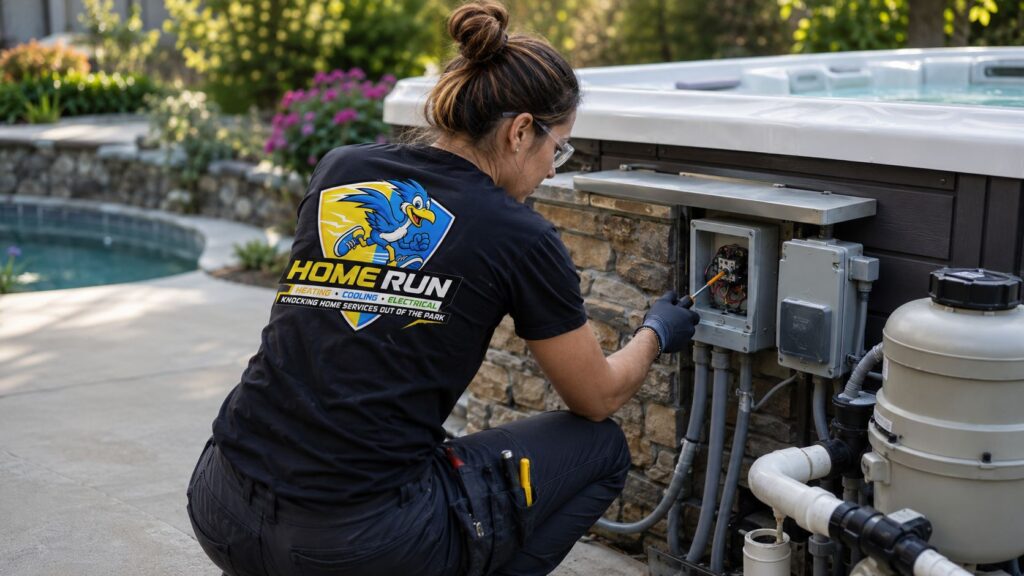
Water and electricity demand extra care. Home Run provides electrical work for residential pools, spas and hot tubs, including dedicated circuits, GFCI disconnects, pump and lighting circuits and equipment bonding, for homeowners in Covington, McDonough, Conyers and nearby Georgia communities.
Hot Tub Electrical
Most full-size hot tubs need a dedicated 240-volt circuit, often 40 to 60 amps depending on the model, with a GFCI-protected disconnect. The disconnect must be within sight of the tub and at least 5 feet away from its inside wall. We follow the manufacturer’s electrical specifications, size the wire and breaker correctly and choose a route that is protected from damage.
Pool Electrical Work
- Circuits for pool pumps, filters, heaters and automation systems
- Pool and landscape lighting with the required protection
- GFCI protection for pool equipment and nearby outlets
- Equipotential bonding of pool equipment and metal parts to reduce shock risk
- Replacing old or corroded pool equipment wiring
Planning a New Pool or Spa
Bring us in early. Knowing where the equipment pad, pump and hot tub will sit lets us plan the cleanest route from the panel and confirm your panel has enough capacity. If it does not, we can discuss a service upgrade or subpanel.
Pool and Hot Tub Electrical FAQs
What is bonding, and why does it matter?
Bonding connects metal parts of the pool and equipment together so they stay at the same electrical potential. This reduces the risk of shock from voltage differences around the water.
Can I plug my hot tub into a regular outlet?
Only small plug-and-play spas are designed for a standard 120-volt GFCI outlet, and they still need their own circuit. Full-size hot tubs require a hardwired 240-volt circuit.
Related: dedicated circuits and outdoor lighting. Serving McDonough, Madison, Covington and nearby homes.